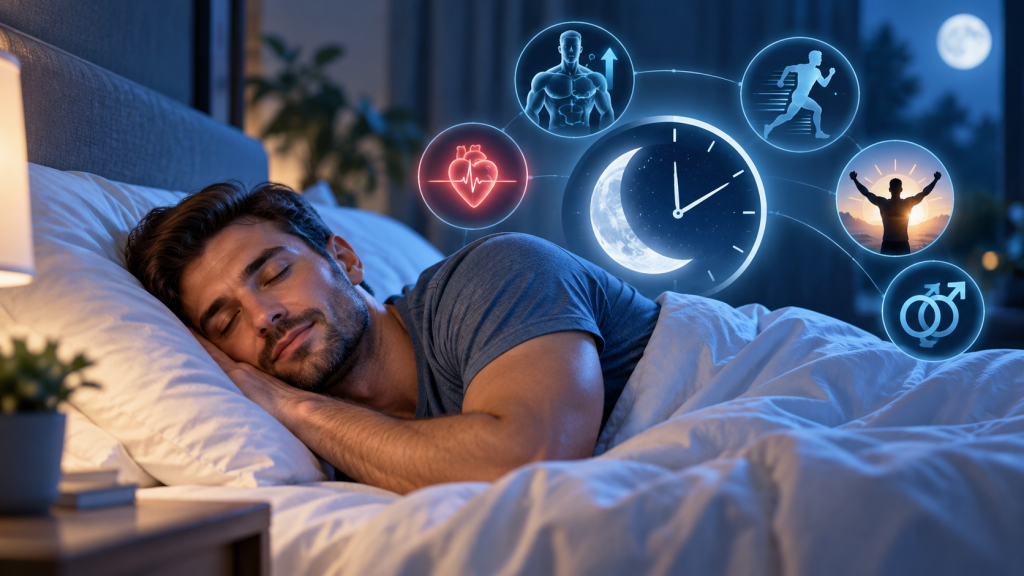
Sleep and Men’s Health are closely connected, yet sleep is often overlooked when men evaluate their overall well-being.
In my clinical practice, men frequently discuss their cholesterol levels, testosterone, and exercise routines, but rarely mention their sleep quality unless I ask. I make it a priority to ask because poor sleep can affect testosterone regulation, cardiovascular health, metabolism, cognitive function, sexual performance, and overall vitality. Understanding the relationship between sleep and men’s health is essential for maintaining long-term wellness and healthy aging. This article examines the scientific evidence, distinguishes established findings from emerging research, and explains when sleep problems warrant medical evaluation. Sleep and men’s health are important topics because sleep influences hormones, cardiovascular risk, energy, recovery, and sexual well-being. The information is intended for general education and should not replace personalized medical advice.
Sleep and Men’s Health: How Much Sleep Adults Need
The American Academy of Sleep Medicine and the Sleep Research Society recommend that adults sleep 7 or more hours per night on a regular basis to promote optimal health. Regularly sleeping less than 7 hours is linked to a higher risk of weight gain and obesity, diabetes, high blood pressure, heart disease, stroke, depression, a weaker immune system, and death from any cause. Short sleep also impairs performance and raises the risk of errors and accidents. These associations are observed across populations, so they don’t predict what will happen to any one person. When discussing sleep and men’s health, one of the most consistent findings is that most adults need at least seven hours of sleep each night.
Sleep and testosterone
The best-known study is a small University of Chicago experiment published in JAMA in 2011. Ten healthy young men, with an average age of about 24, slept up to 10 hours a night for three nights, then fewer than 5 hours a night for about a week. Their daytime testosterone fell by roughly 10 to 15 percent.
Keep the limits in mind:
- It was a small study of young, lean, healthy men in a laboratory.
- It tested a short stretch of severe sleep restriction, and it doesn’t show what happens to men in their 40s or 50s over years.
- The reported drop is a lab measurement, and it doesn’t mean your testosterone is “low” in a clinical sense.
The practical point is modest but real: if you’re sleeping five hours a night and worried about testosterone, fixing your sleep is a reasonable first step before anything else.
Sleep apnea and sexual function
Obstructive sleep apnea, where breathing repeatedly stops during sleep, is common in men and often goes undiagnosed. A systematic review and meta-analysis of eight studies found that more severe sleep apnea was associated with lower erectile function scores and that CPAP treatment was associated with improved erectile function, though results varied across studies. The authors recommend screening men with erectile dysfunction for sleep apnea. The studies were small and varied, and age affected the results, so this is evidence of an association, not proof that apnea causes ED.
Men experiencing persistent erectile difficulties should also understand the common causes of erectile dysfunction and when a clinical evaluation may be necessary.
Signs to take seriously
Tell your clinician if you have:
- Loud snoring, or a partner who has seen you stop breathing during sleep
- Daytime sleepiness that interferes with work or driving
- Morning headaches or waking up unrefreshed despite enough hours
- New erectile problems or falling energy, together with poor sleep
A sleep study can diagnose apnea, and treatment can help.
Practical steps that help most people
- Keep regular sleep and wake times, including on weekends.
- Get morning light and regular exercise, but avoid hard workouts right before bed.
- Limit caffeine in the afternoon and alcohol near bedtime. Alcohol may help you fall asleep, but it disrupts sleep later in the night.
- Keep the bedroom dark, cool, and quiet, and keep screens out of bed.
- If you can’t sleep after about 20 minutes, get up and do something quiet until you feel sleepy.
If poor sleep lasts more than a few weeks, talk to your clinician. Insomnia and sleep apnea are treatable.
Men concerned about sexual performance may also consider over-the-counter supplements. However, the evidence supporting these products varies, and some may contain undisclosed ingredients. Understanding whether male-enhancement supplements work can help men make better-informed decisions about their sexual health.
Bottom line
Seven hours is not a magic number, but regularly getting less raises the risk of many problems. If sleep is a struggle, treat it as a health issue, not a personal failing. Overall, sleep and men’s health are closely linked, which is why persistent sleep problems deserve attention rather than being dismissed.
Educational only. This site doesn’t provide medical advice, diagnosis, or treatment, and it isn’t a substitute for care from your own clinician.
Sources
- AASM and Sleep Research Society, “7 and Up: The Healthy Sleep Duration for Adults”
- Leproult R, Van Cauter E. Effect of 1 week of sleep restriction on testosterone levels in young healthy men. JAMA 2011 (University of Chicago Medicine summary)
- Systematic review and meta-analysis: obstructive sleep apnoea and erectile dysfunction (UroToday abstract)