Erectile Dysfunction Causes are often more complex than men realize, involving cardiovascular health, hormonal imbalances, diabetes, medication effects, psychological factors, and lifestyle habits. Erectile dysfunction (ED) is one of the most common sexual health concerns men hesitate to discuss. In my clinical practice, patients frequently tell me they waited months or even years before seeking medical advice.
Understanding erectile dysfunction causes is essential because persistent erection difficulties may sometimes be an early warning sign of underlying medical conditions, including cardiovascular disease. This article examines the most common causes, explains important warning signs, and discusses when a clinical evaluation is appropriate. The information is intended for general education and should not replace personalized medical advice.
What ED is and how common it is
ED means having trouble getting or keeping an erection firm enough for sex. The National Institute of Diabetes and Digestive and Kidney Diseases (NIDDK) estimates that about 30 to 50 million men in the United States have it. It becomes more common with age: roughly 40 percent of men at age 40 and about 70 percent by age 70 report it. But the NIDDK is clear that ED is not a routine part of aging, so it’s worth taking seriously at any age.
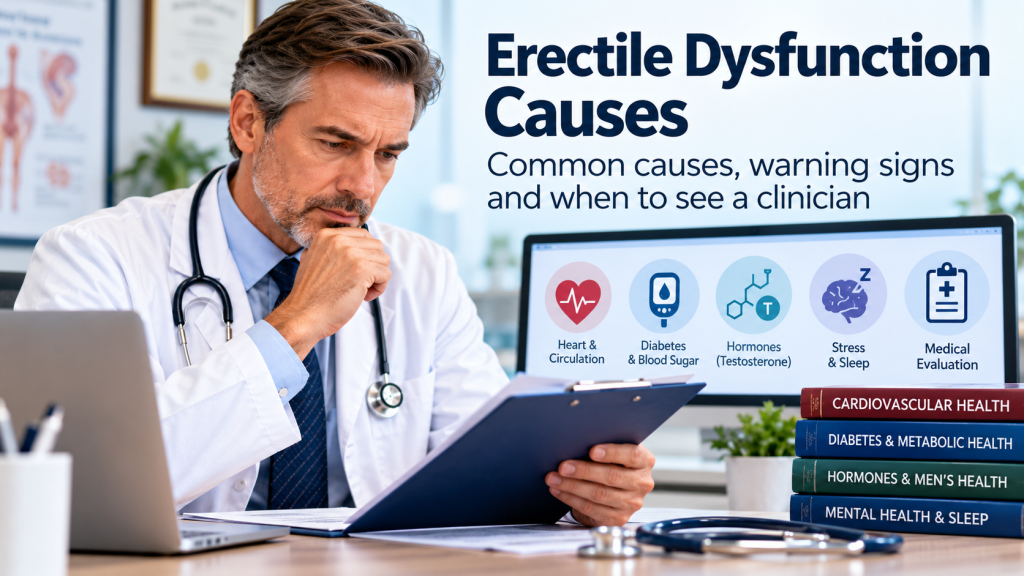
Erectile Dysfunction Causes: Common Physical Conditions
According to the Mayo Clinic, common erectile dysfunction causes include cardiovascular disorders, metabolic conditions, medication effects, neurological diseases, and hormonal abnormalities. The following conditions may contribute to erectile difficulties:
- Heart disease, clogged arteries, high cholesterol, and high blood pressure
- Diabetes, obesity, and metabolic syndrome
- Certain prescription medicines, including some blood pressure medicines, antidepressants, and antihistamines
- Tobacco use, heavy alcohol use, and drug use
- Sleep conditions
- Low testosterone
- Parkinson’s disease, multiple sclerosis, and surgery or injury affecting the pelvis or spinal cord
- Treatments for prostate cancer or an enlarged prostate
- Peyronie’s disease
Psychological causes
Depression, anxiety, stress, and relationship problems can cause or worsen ED. Physical and mental causes often overlap. Worrying about a minor physical problem can make the difficulty worse.
Why ED can be a warning sign
Mayo Clinic notes that ED can be a sign of a health condition that needs treatment and a risk factor for heart disease. Because the same blood vessel problems that affect the heart can also affect erections, new ED is a reason to check your blood pressure, cholesterol, blood sugar, and overall heart risk. This is why I treat ED as a health question as well as a sexual one.
When to see a clinician
Make an appointment if:
- You’re worried about your erections, or have other sexual problems such as premature or delayed ejaculation
- You have diabetes, heart disease, or another condition that may be linked to ED
- You have other symptoms along with ED, such as chest pain, shortness of breath, or dizziness
- ED began after you started a new medicine
Seek urgent care for chest pain or other emergency symptoms.
What an evaluation usually involves
Expect questions about your health history, medicines, mood, sleep, alcohol, smoking, and relationship. A physical exam and basic tests, such as blood pressure, blood sugar, cholesterol and sometimes testosterone, are common. The goal is to identify the cause, because treating it is often part of treating ED. Your clinician can then talk through the options with you.
Things that may help
- Stopping smoking, limiting alcohol, and staying active
- Managing weight, blood pressure, cholesterol, and blood sugar
- Getting enough sleep, and being checked for sleep apnea if you snore or feel tired all day (see our article on sleep and men’s health)
- Reviewing your medicines with your clinician, without stopping them on your own
A note on supplements
Many “male enhancement” products are marketed for ED. They can’t tell you why you have it, and the FDA has warned about hidden drug ingredients in some of them. See our article on how to read the evidence for supplements.
Bottom line
ED is common, treatable, and often a useful early signal about your overall health. Getting evaluated is the sensible first step.
Educational only. This site doesn’t provide medical advice, diagnosis, or treatment, and it isn’t a substitute for care from your own clinician.